
BSC Biological Safety Cabinets
A biological safety cabinet (BSC, or biosafety cabinet) uses HEPA-filtered airflow to protect the user, the sample and the laboratory when working with microorganisms and cell cultures. CSI Labshop supplies biosafety cabinets to microbiology, food, research and university laboratories across Malaysia.
Tell us the organisms or samples you handle, any chemicals used in the cabinet and your room layout, and we will recommend the right class and size and send a quotation.
Classes of biological safety cabinet
- Class I protects the user and the room, but not the sample. It suits enclosing equipment or work where product protection is not needed. See ESCO Class I and BIOBASE Class I cabinets.
- Class II Type A2 is the most widely used cabinet. It protects the user, the sample and the room, recirculating most of the filtered air and exhausting the rest. See ESCO Class II A2, BIOBASE Class II A2 and Fisher Scientific EN 12469 cabinets.
- Class II Type B1 and B2 are ducted to the building exhaust, so they can be used with small amounts of volatile chemicals. B2 is total exhaust. See ESCO B1, ESCO B2 and BIOBASE B2 cabinets.
- Class III cabinets are gas-tight glove boxes for the highest-risk work. See ESCO Class III cabinets and isolators.
- Sterile boxes give a simple clean workspace for low-risk sterile handling. See the SANPLATEC DX sterile box.
How to choose a biosafety cabinet
- Risk: your biosafety officer’s risk assessment decides the class; most BSL-2 work uses Class II A2.
- Chemicals: if you use volatile chemicals inside the cabinet, choose a ducted B1 or B2 model.
- Width: common sizes are 0.9, 1.2, 1.5 and 1.8 m. Choose by the number of users and the equipment inside.
- Standards: look for cabinets tested to EN 12469 or NSF/ANSI 49.
- Certification: plan for on-site testing after installation and once a year.
Brands we supply
- ESCO: Class I, II (A2, B1, B2) and III cabinets
- BIOBASE: Class I and Class II cabinets, NSF and EN certified models
- Fisher Scientific: NSF 49 and EN 12469 certified cabinets
- SANPLATEC: sterile boxes and enclosures
Frequently asked questions
What is the difference between a biosafety cabinet and a laminar flow cabinet?
A laminar flow (clean) bench protects only the sample and blows air towards the user. A biosafety cabinet protects the user as well, so it is the right choice for microorganisms and cell cultures.
Is a biosafety cabinet the same as a fume hood?
No. A fume hood removes chemical fumes; a biosafety cabinet filters out microorganisms with HEPA filters. Choose by the hazard you work with.
Which class is used for BSL-2 work?
Class II Type A2 is the usual choice for BSL-2 laboratories. Use a ducted B1 or B2 cabinet if volatile chemicals are involved.
How much does a biosafety cabinet cost in Malaysia?
The price depends on the class, width, certification and installation needs. Send us your requirements for a quotation.
-
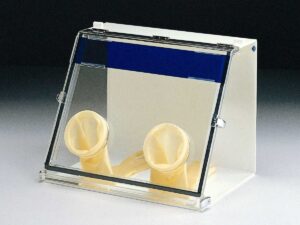
Sterile Boxes & Enclosures (2)
-
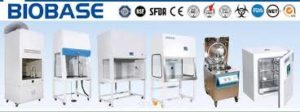
Biobase Cabinets (11)
-
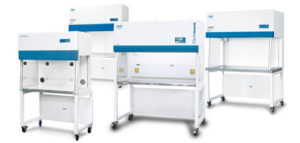
ESCO cabinets (7)
-
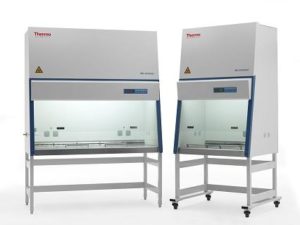
Fisher Scientific Cabinets (3)
Not sure which model fits?
Tell us your application, sample type and budget. We’ll suggest suitable models from the brands we supply and send one quotation.